Debora Threedy on creating ‘RADIO HOUR EPISODE 18: THE LAND OF OZ’
 BY DEBORA THREEDY
 BY DEBORA THREEDY
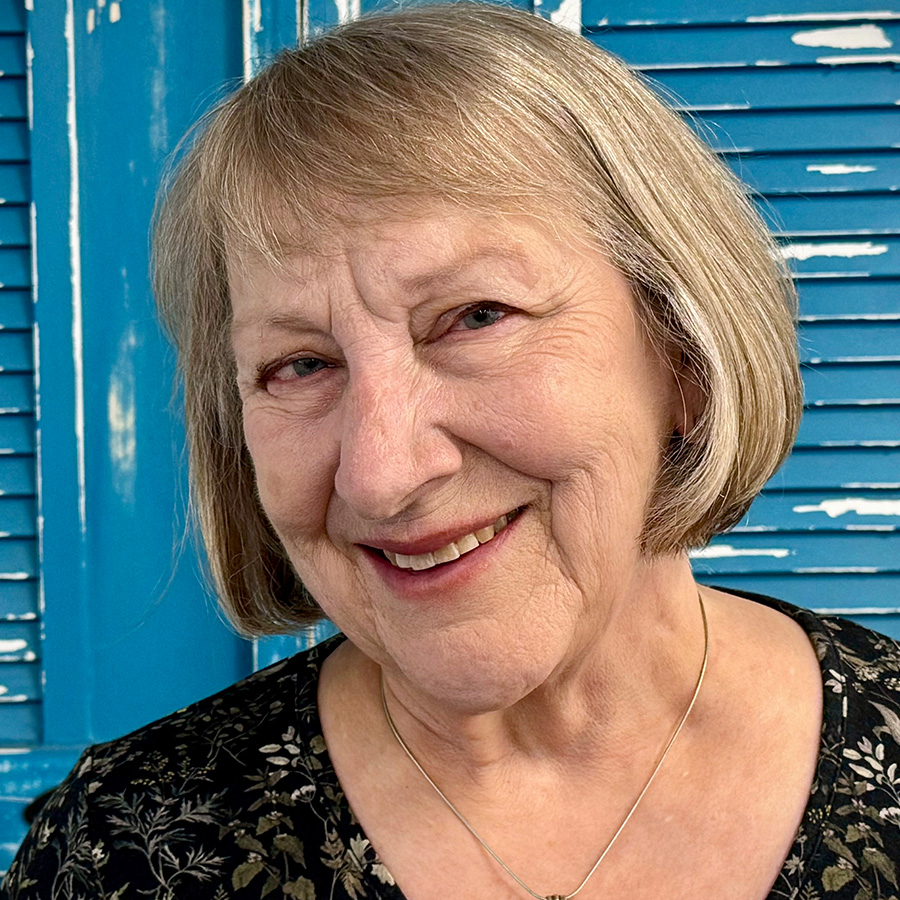
Playwright Debora Threedy recently retired after many years of teaching law at the University of Utah, to spend more time writing plays. Plan-B has produced the world premieres of her plays THE END OF THE HORIZON, “Where I Come From” as part of WALLACE, THE THIRD CROSSING, (for which she won the Fratti-Newman New Political Play Contest in New York City), ONE BIG UNION, “The Wall, Parts 1 & 2” as part of (IN)DIVISIBLE, ALLI & #3 (for the Free Elementary School Tour), and BALTHAZAR. Her plays MOUNTAIN MEADOWS and POSTCARDS FROM MECCA (the latter co-written with Teresa Sanderson) received their world premieres at Pygmalion Theatre Company. Debora has also workshopped three of her plays at the Utah Shakespeare Festival, and several others at the Center fore the Arts at Kayenta. Member, Plan-B's The Lab.
Most of us know L. Frank Baum’s children’s book, THE WONDERFUL WIZARD OF OZ, if only through the movie adaptation. Fewer are aware that Baum actually wrote a series of Oz books, fourteen in all. This play is based upon the second in the series, THE MARVELOUS LAND OF OZ.
The story tells us what happened in Oz after Dorothy and the Wizard left. The Scarecrow is now the King of Oz, and trouble is brewing in paradise.
Baum takes a number of familiar fairy tale tropes–a wicked witch, a lost princess under a curse, odd and wondrous creatures, a fairy godmother, and magic, so much magic!–but he also adds some elements reflecting his own times (late nineteenth/early twentieth centuries), as all authors do, as well as the influence of his well-known mother-in-law, Matilda Joselyn Gage.
Gage is not as well known today as some of the women she worked with, such as Susan B. Anthony. She helped found the National Women’s Suffrage Association and served as its president from 1875-76 and then in leadership positions for the next twenty years, but eventually her views became too radical even for that group. In addition to women’s rights, she also 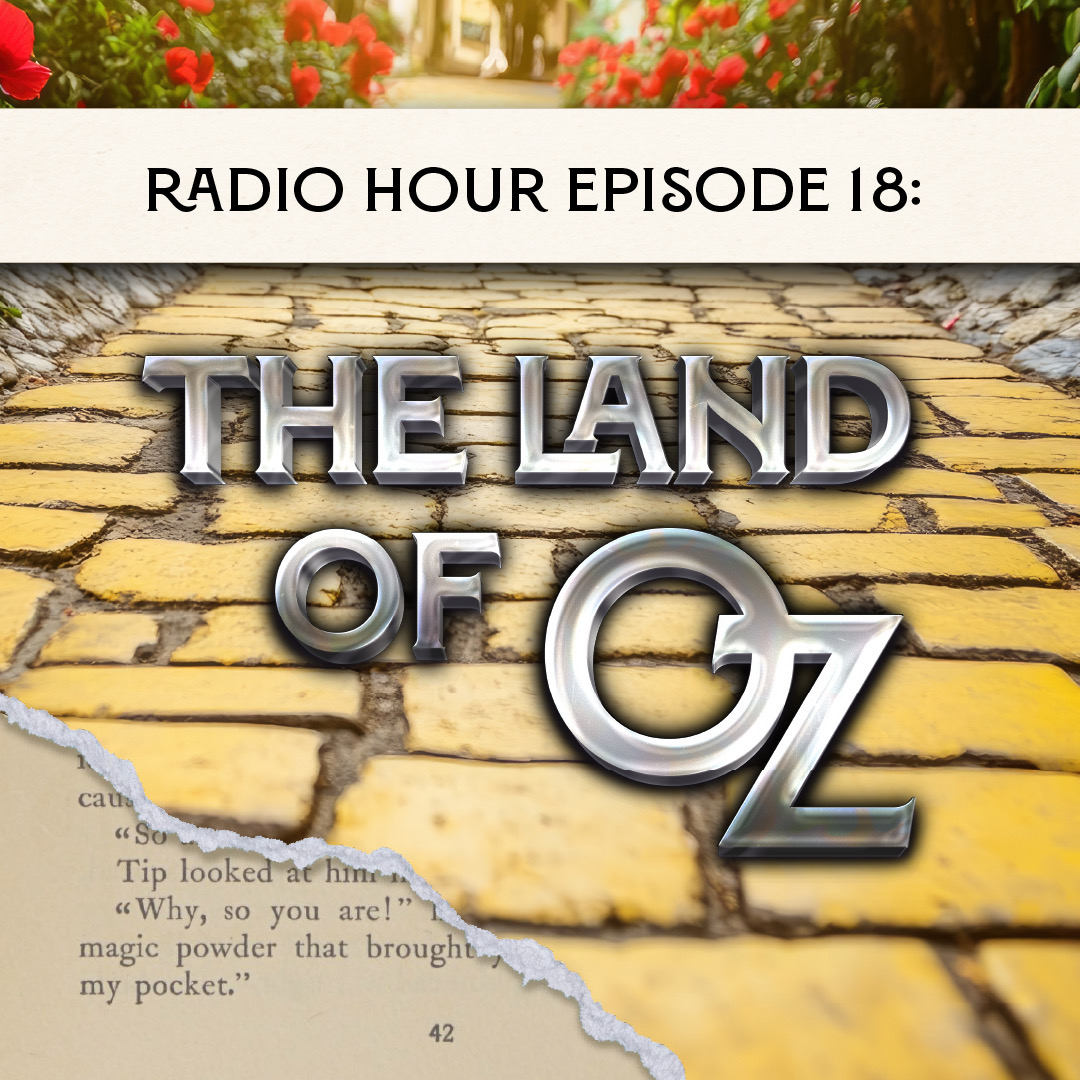 advocated for the rights of indigenous people and spent time among the Iroquois. She admired the greater equality between the sexes in Iroquois society, where matrilineal descent and women’s property rights were recognized. More recently, the “Matilda Effect,” which refers to the tendency to overlook the scientific contributions of women, is named after her.
Baum admired her views and activism. In THE LAND OF OZ, this is reflected in the character of General Ginger. She has organized the young women of Oz into an army and they have marched on the Emerald City, the capitol of Oz, to claim the throne. “Men have ruled long enough,” she announces.
As with all fairy tales, the resulting chaos is soon set to rights and everyone receives their just deserts, in ways both expected and un-.
This is my first radio play, and I’m discovering the similarities and differences between writing radio plays versus stage plays. To me, the similarities vastly outweigh the differences. Dialogue is crucial to both types of plays, for weaving the story and revealing character and emotion, and in my opinion writing dialogue for radio plays is very much like writing dialogue for stage plays. I like writing dialogue and it comes rather easily for me.
To me, the most significant difference lies in the imaginative work that encompasses everything outside of the dialogue. A stage play must engage more than the audience’s ear; it is a three-dimensional art form and it must have a visual and spatial aspect as well as audio, what the classists called “spectacle.” I confess this comes less easily to me, and I have heard on more than one occasion the criticism that my plays are too “talky.”
I have had to train myself to include activity in my plays, not just two or more people sitting around talking all the time, and the activity must further the drama in some way. Then I “watch” my play unfolding in my mind’s eye, and describe what I “see,” either indirectly within the dialogue (for instance, one character says to another “Put that down, it’s very fragile” – which conveys with words that another character has picked something up) or through stage directions (for example, “GARY crosses to the mantle and picks up an expensive vase”).
 But I’m finding that with radio plays, I must engage my imagination in yet another way. While a radio play is only words, it still must prompt an audience imaginatively to “see” what is happening, and, beyond words, the only tool available for the playwright to do that is sound effects. Within the world of my radio play, I search for action that creates readily understood noises. Then while I am imaginatively “watching” my play unfold in my mind’s eye, I note the sounds that accompany whatever it is I’m “seeing.” Radio plays require a third level of imaginative work; the dialogue, the spectacle, and the noise the spectacle creates.
It is an art onto itself and one I am still struggling to master. After the first reading of THE LAND OF OZ, someone (maybe Jerry Rapier or Cheryl Cluff, maybe Matthew Ivan Bennett, who is the local grand master of radio plays and who has generously mentored me through the process) gently suggested that I didn’t need to have a sound effect cue for “the sound of footsteps” every single time a character moved! Not all sounds have similar dramatic weight!
 TICKETS
 TICKETS
RADIO HOUR EPISODE 18: THE LAND OF OZ by Debora Threedy receives its world premiere as Plan-B's 18th episode of RADIO HOUR, a co-production with KUER's RadioWest, on Wednesday, December 16, 2026 at 11am and 7pm. You are the live studio audience! Please click here for details and tickets!